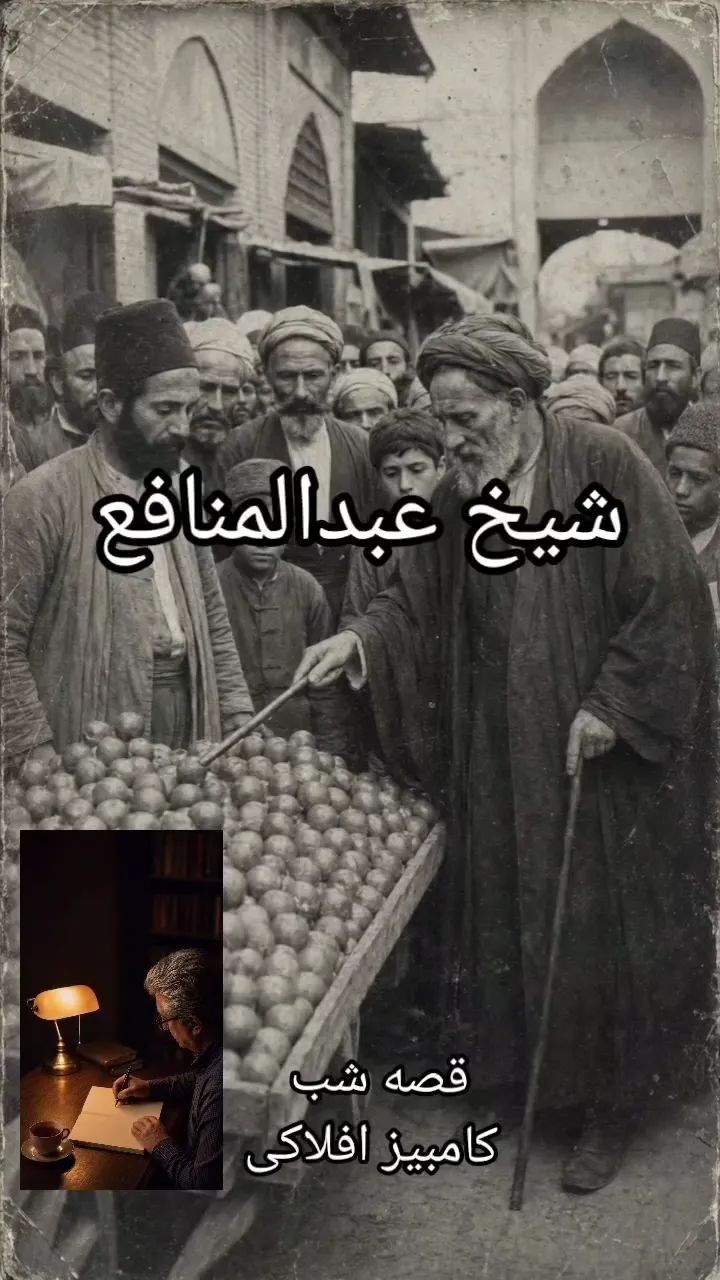
داستان کوتاه / شیخ عبدالمنافعShort Stories / Sheikh Abdolmanafe
Jinn in the Blood
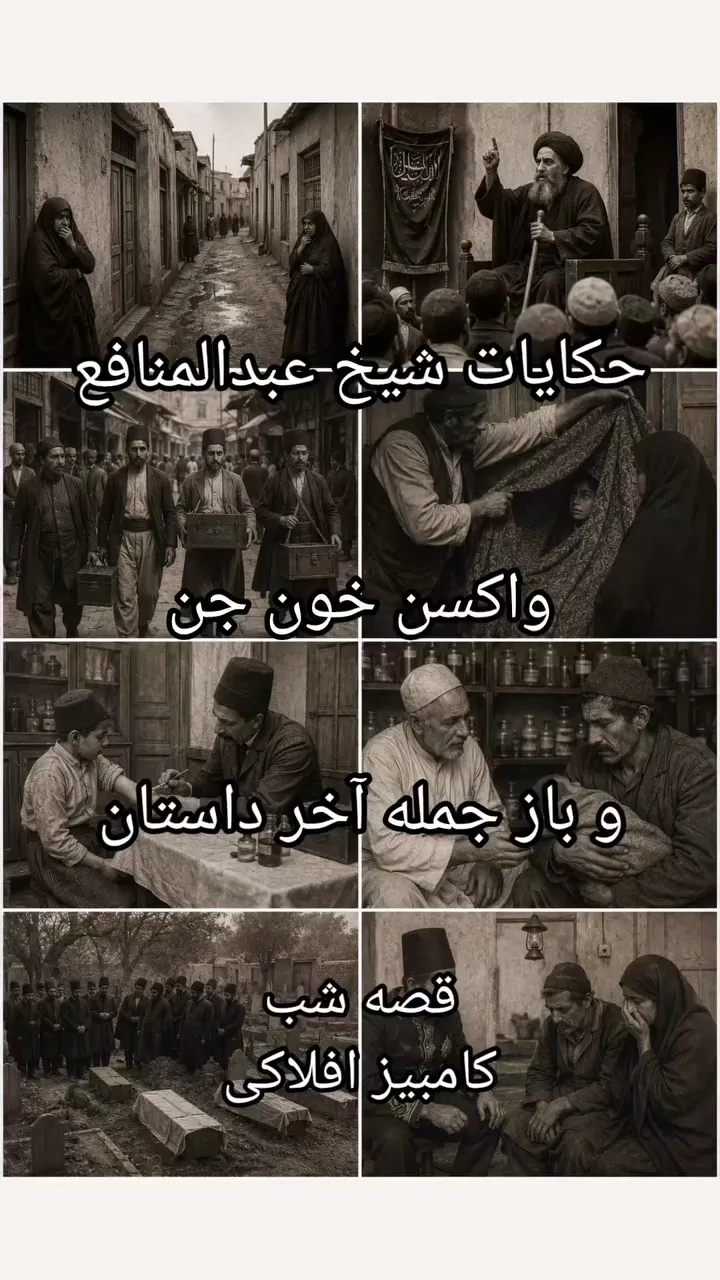
It was the year of smallpox. In every alley, you heard either a child coughing or a mother wailing as she drew a white cloth over her child’s face.
- 4 min read
- With video
Drag a page corner to turn it, or tap the page
It was the year of smallpox.
In every alley, you heard either a child coughing or a mother wailing as she drew a white cloth over her child’s face.
Smallpox made no distinction between rich and poor, but it knocked more often on the doors of the poor.
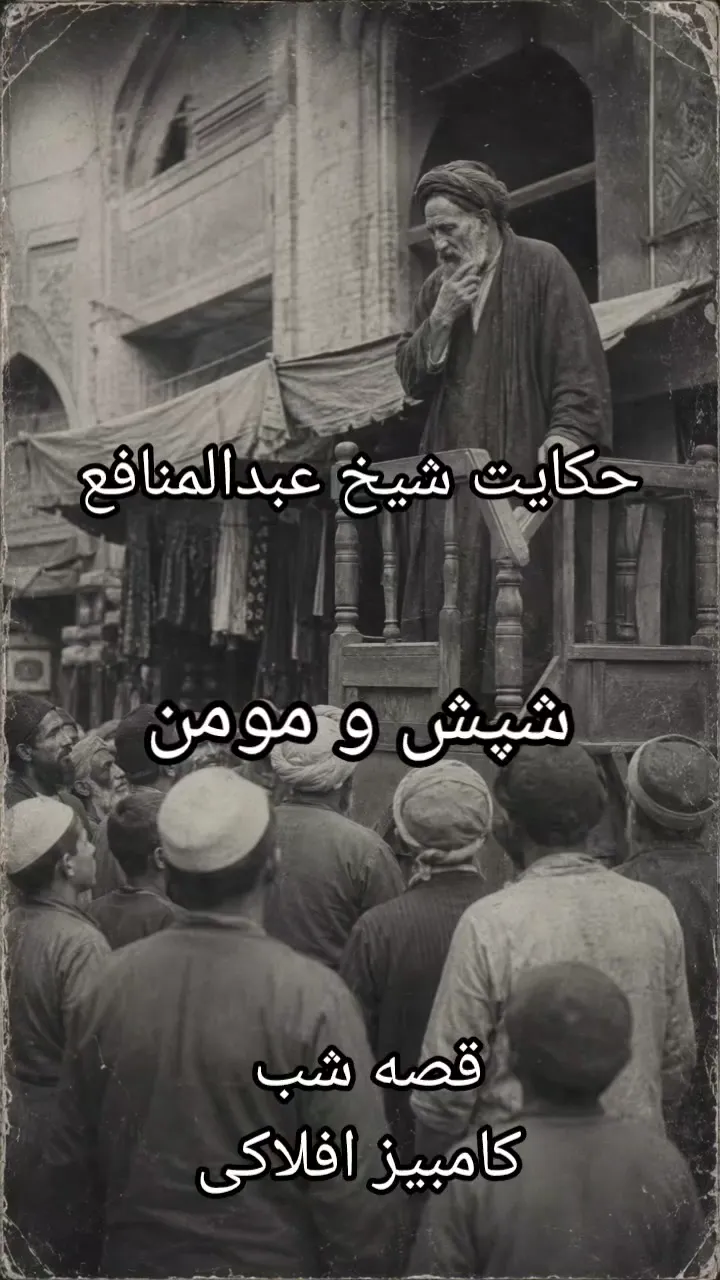
People fled vaccination because the sheikh, from his pulpit, and the sellers of prayers, among the people, had told them,
“People! This medicine is made by Europeans! They take it from pig’s blood and pour it into the blood of Muslim children! They want to rob Muslim boys of their honor and Muslim girls of their purity. Both will become infertile. The unbelievers want to wipe out our descendants.”
Women held their children tighter.
The sheikh lowered his voice.
“Reliable news has reached us. Every child who is inoculated has a passage opened in their blood for jinn to enter!”
A murmur spread through the mosque.
“What should we do, Haj Agha?” a man asked.
The sheikh stroked his beard.
“What have we always done? We have prayers to ward off smallpox.”
“The children are dying,” a man said.
“Death is not in your hands, you fool!” the sheikh shouted. “It is in God’s hands. Every Muslim who dies goes to heaven. Hell is for the unbelievers, and everything they make.”
A few days later, vaccinators carrying wooden boxes and bottles of medicine set out for Tehran’s neighborhoods.
A town crier shouted in the bazaar,
“By order of the chief minister! Bring the children for inoculation, so they may be spared death and blindness! Anyone who fails to do so will be fined five tomans.”
Everyone hid their children.
Among them was Taghi the cobbler.
“Bring the boy,” the vaccinator had told him. “If he catches smallpox, he may not survive.”
But Taghi said the sheikh had declared,
“Anyone who submits to a European needle doubts God’s decree.”
Taghi trusted the sheikh’s prayer charm hanging around his son’s neck.
A few days later, smallpox came to his house.
Taghi rushed to Keykhosrow the herbalist.
“I beg you, my son is slipping away. Give me something.”
The herbalist sighed.
“I have nothing for smallpox. Why didn’t you have him inoculated?”
“They said my son would become impure. That he would become infertile.”
With tears running down his face, the herbalist said,
“It’s your mind that is impure and barren. The man who forbade you had his own son inoculated.”
On the morning of the third day, Taghi’s son could no longer be heard breathing.
Amir Kabir was passing Taghi’s house when he heard a woman wailing.
Taghi’s shoulders were shaking.
A sheikh standing there said,
“It was God’s decree.”
Amir turned, his eyes red, his voice making the windows tremble.
“God did not decree this. This infection comes from minds closed to knowledge and open to superstition. Ignorance is the only contagious disease for which there is no vaccine.”
Taghi the cobbler took his son’s body in his arms and went to the sheikh’s house.
At that very moment, the sheikh’s son was playing in the courtyard, healthy and laughing, with a small scar on his arm.
Taghi the cobbler stared at the boy’s arm, then looked at the sheikh.
He removed the prayer charm written on deerskin from his dead son’s neck and threw it at the sheikh’s feet.
In a voice that was neither a shout nor a sob, he asked,
“Did the jinn know the way only into our children’s blood? Or do you keep your own door shut with coins?”
The sheikh glanced at the crowd.
He struck his stick against the ground.
“Hold your tongue, man! Your child’s death was God’s will… and my child’s health comes from the blessing of his father’s prayers.”
Then he bent down, picked up the fallen charm, shook off the dust, and turned to the people.
“This prayer is still valid… Who wants to buy it?”
The historical setting is real. Smallpox inoculation in Iran began before Amir Kabir, but in 1848 he pursued it more vigorously and on a wider scale. Public resistance, fear of the new method, and rumors that inoculation allowed jinn to enter the body also appear in historical accounts. The sheikh, his family, and the events of this tale are fictional. (PubMed)