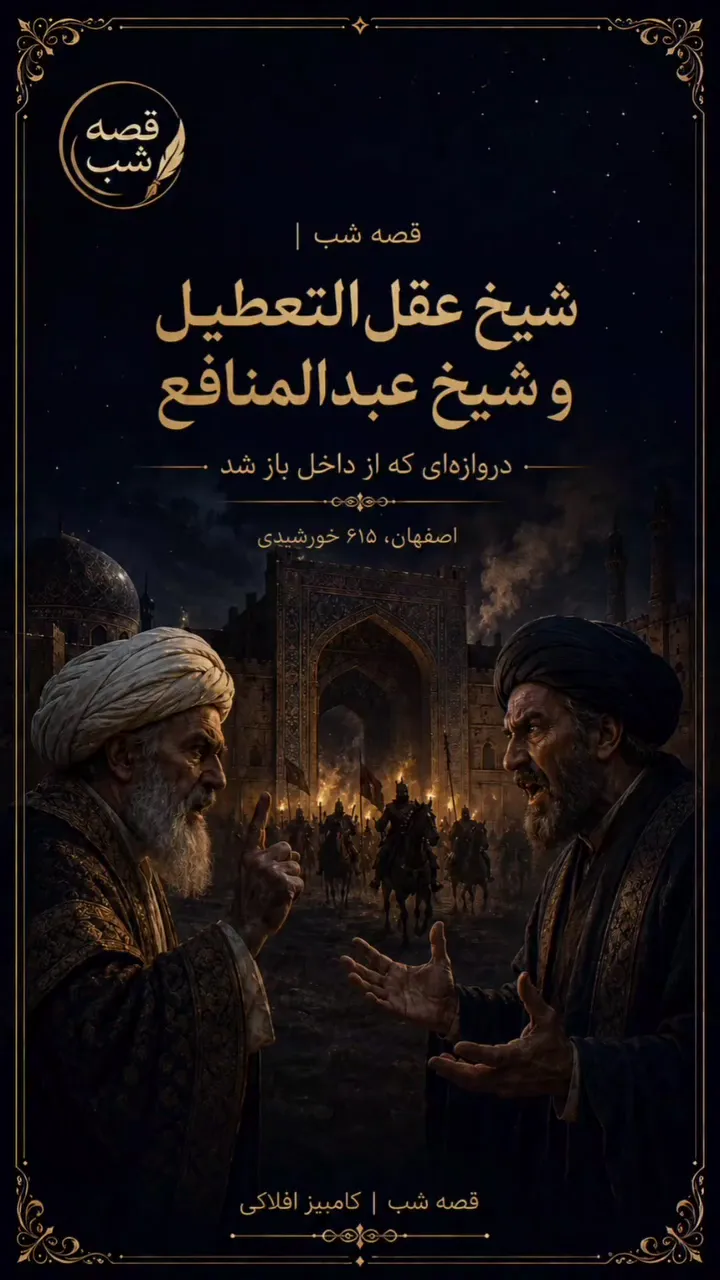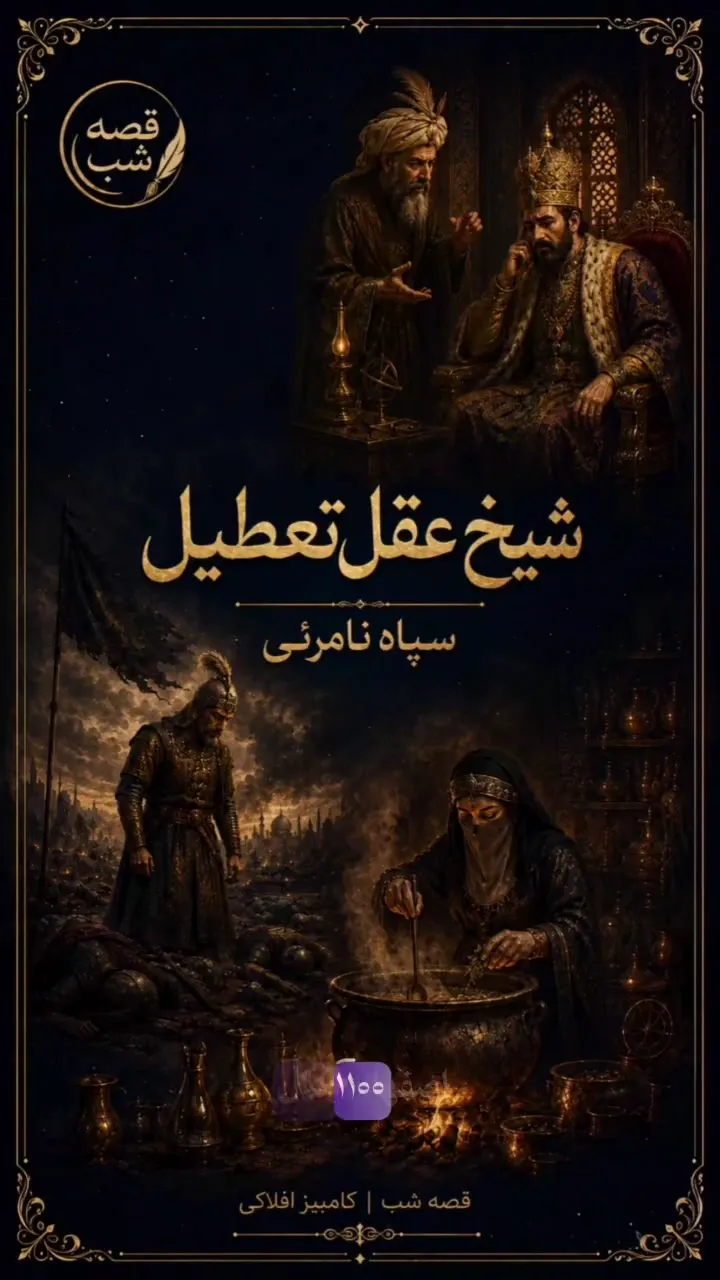
داستان کوتاه / شیخ عقلالتعطیلShort Stories / Sheikh Aql-al-Tatil
The Invisible Army
Sheikh Aql-al-Tatil is a fictional character. This satirical story draws inspiration from historical accounts of the Battle of Gulnabad and the final days of Safavid rule.
- 3 min read
- With video
Drag a page corner to turn it, or tap the page
Sheikh Aql-al-Tatil is a fictional character. This satirical story draws inspiration from historical accounts of the Battle of Gulnabad and the final days of Safavid rule.
Isfahan, 1100 in the Solar Hijri calendar.
The Afghan army was approaching.
In the palace, commanders stood around a map.
“Your Majesty, we must move the artillery forward,” one said.
“If we attack today, we still have a chance,” said another.
The shah remained silent.
Suddenly, the hall door opened.
A man in a long cloak, with a thick beard, entered.
Sheikh Aql-al-Tatil, the palace diviner.
He looked at the commanders.
“No one is to attack today.”
“Why?” a commander asked.
The sheikh glanced at the sky.
“The stars are unfavorable.”
“Sheikh, the Afghans are on the ground, not in the sky!”
The sheikh frowned.
“Do you understand astronomy? What do you know of the mysteries of the heavens and the occult sciences?”
“Then what should we do?” the shah asked.
The sheikh smiled.
“We will make it impossible for the enemy to see your soldiers.”
The shah stepped forward.
“How?”
“We shall make them invisible,” the sheikh said softly.
The commander stared.
“Invisible?”
“We need only a few things.”
He paused.
“Two legs from a male goat…”
The commander closed his eyes.
“Three hundred and twenty-five chickpea pods…”
“And a virgin girl to recite the declaration of faith three hundred and twenty-five times over the water in which they are cooked.”
“Your Majesty!” the commander said angrily. “We need cannons and muskets. He wants chickpeas and goat’s legs!”
He turned to the sheikh.
“Occult sciences won’t fight our war for us.”
“Do not doubt, Commander,” the sheikh snapped. “Doubt will ruin the effect.”
That night, pots were set over the fires in the palace kitchen.
Two goat’s legs.
Three hundred and twenty-five chickpea pods.
And a prayer repeated again and again.
This strange meal was supposed to conceal the Safavid soldiers from the enemy’s eyes.
Morning came.
The food was distributed among the soldiers.
The army marched.
The battlefield of Gulnabad.
The soldiers advanced.
“I think we’re invisible now,” one whispered to his friend.
At that moment, a shot struck the ground beside his foot.
He paused and looked at his friend.
“I think they can see us…”
The battle began.
The chickpeas did nothing.
Nor did the goat’s legs, the prayers, or the stars.
No one became invisible.
The army was defeated.
The commander stood on the battlefield above his soldiers’ bodies.
He looked at the dead, then toward the road to Isfahan.
And he wept for his soldiers, his city, and the fate of a country trapped in superstition and ignorance.
The road to Isfahan lay open.
Siege.
Famine.
After the defeat, a courtier found Sheikh Aql-al-Tatil.
“Sheikh! Didn’t you say the soldiers would become invisible?”
The sheikh stroked his beard.
“How strange…”
“What is strange?” the man shouted.
The sheikh thought for a moment.
“They must have counted the chickpea pods incorrectly… Or the girl missed one repetition.”
The enemy had come with cannons and muskets.
We were trying to become invisible with chickpeas.
We lost our reason long ago.
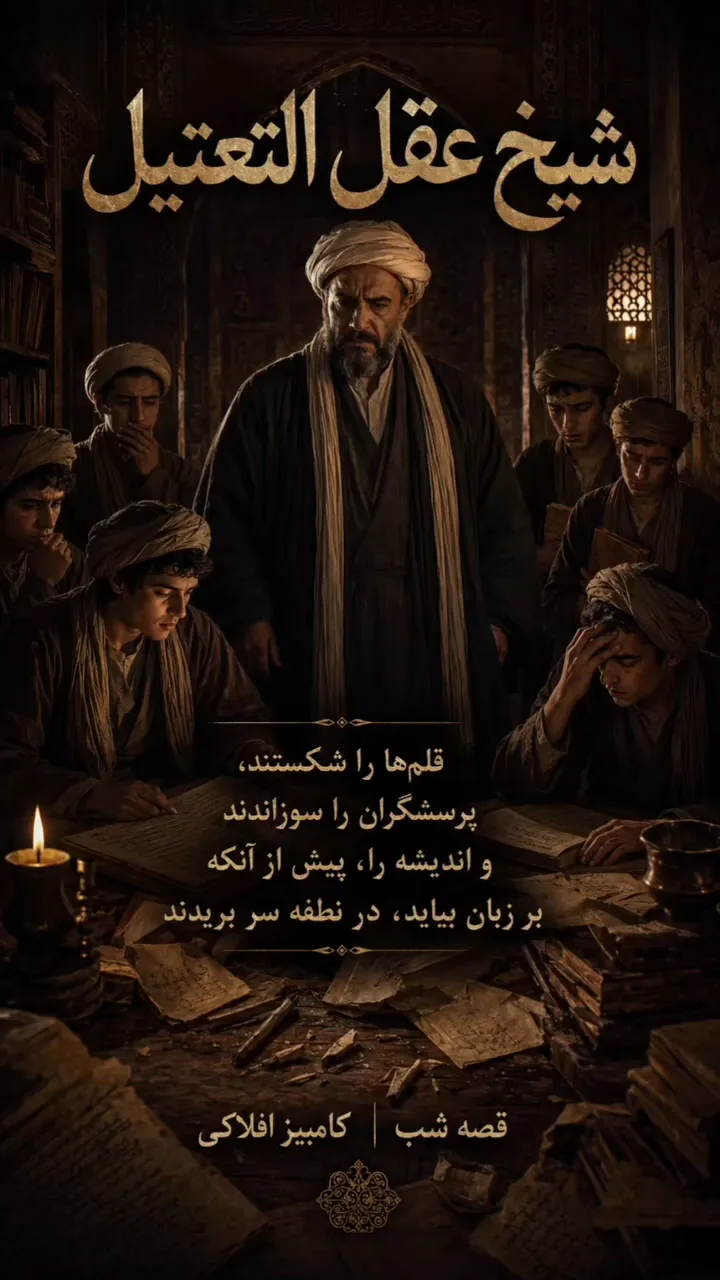
 Short Stories / Sheikh Aql-al-Tatil · 3 min read
The Man Who Declared Thinking an Act of Unbelief